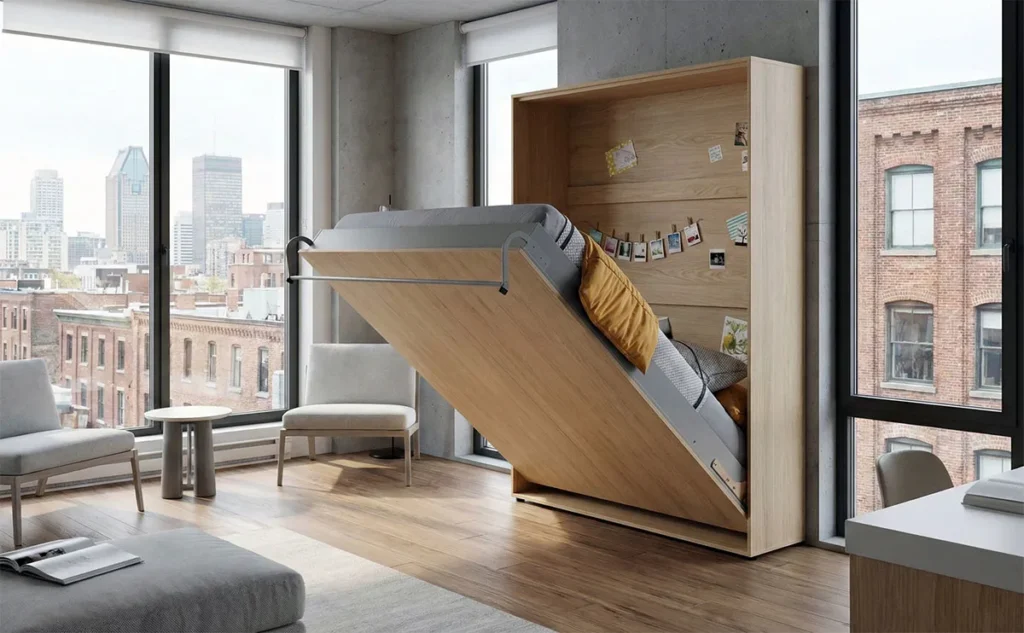

Wall Bed or Murphy Bed? Montreal’s Best Choice


When it comes to maximizing urban living, choosing between a high-quality Wall Bed or Murphy Bed in Montreal is the most effective way to reclaim your floor space.
Whether you are renovating a historic home or furnishing a new condo, understanding the local standards for these space-saving solutions is essential for any Montrealer.
Living in Montreal is a unique experience. From the historic charm of the Plateau’s walk-ups to the sleek, modern condos rising in Griffintown and downtown, we love our city. But let’s be honest: square footage here is becoming a luxury.
Whether you’re in a cozy 3 ½ in the Mile End or maximizing a studio near McGill, you’ve likely asked yourself the golden question of small-space living: “Do I need a Wall Bed or a Murphy Bed, and what is the difference?”
As a local Montreal manufacturer, we understand the specific challenges of Quebec homes, crooked floors in century-old triplexes, tight delivery hallways, and the need for furniture that works as hard as you do.
In this guide, we’ll break down the differences, debunk the myths, and help you decide which space-saving solution is right for your space.
Table of Contents
Are Wall Beds and Murphy Beds Different?
If you’ve spent any time scouring the internet for space-saving solutions, you’ve likely noticed that these terms are used almost interchangeably.
However, for architects, interior designers, and furniture enthusiasts, there is a nuanced technical evolution that distinguishes the two. Understanding this distinction is key to choosing a piece that will last as long as your home.
The Historic “Murphy Bed”
The “Murphy Bed” is not just a piece of furniture; it is an industrial-era invention. Patented by William Lawrence Murphy around 1900, the original design was born out of a specific social necessity: converting a one-bedroom apartment into a parlor for guests.
- The Mechanism: Historically, these units relied on counterbalanced metal spring systems and heavy-duty metal sub-frames. While durable, these springs often required manual tensioning and could be cumbersome to calibrate.
- The Installation: Traditional Murphy units were frequently floor-mounted. This required drilling directly into the subfloor—a significant drawback for modern condos with heated floors or structural concrete.
- The User Experience: The “clunk” and “squeak” often associated with older models were hallmarks of these early spring systems, which lacked the dampened, soft-close movement we expect today.
The Modern “Wall Bed”
What we now refer to as a “Wall Bed” represents the 21st-century evolution of Murphy’s original concept. It is less of a “cot in a closet” and more of a sophisticated piece of integrated cabinetry.
- Piston Technology: Instead of exposed metal springs, modern Wall Beds typically utilize precision gas pistons (similar to the hydraulic struts used in luxury automotive liftgates). This ensures a silent, effortless transition that can be managed with a single hand.
- Structural Mounting: Modern units are designed to be secured directly into wall studs. This is a non-negotiable safety standard in North America, as it distributes the weight across the wall’s structural skeleton rather than putting stress on the floor.
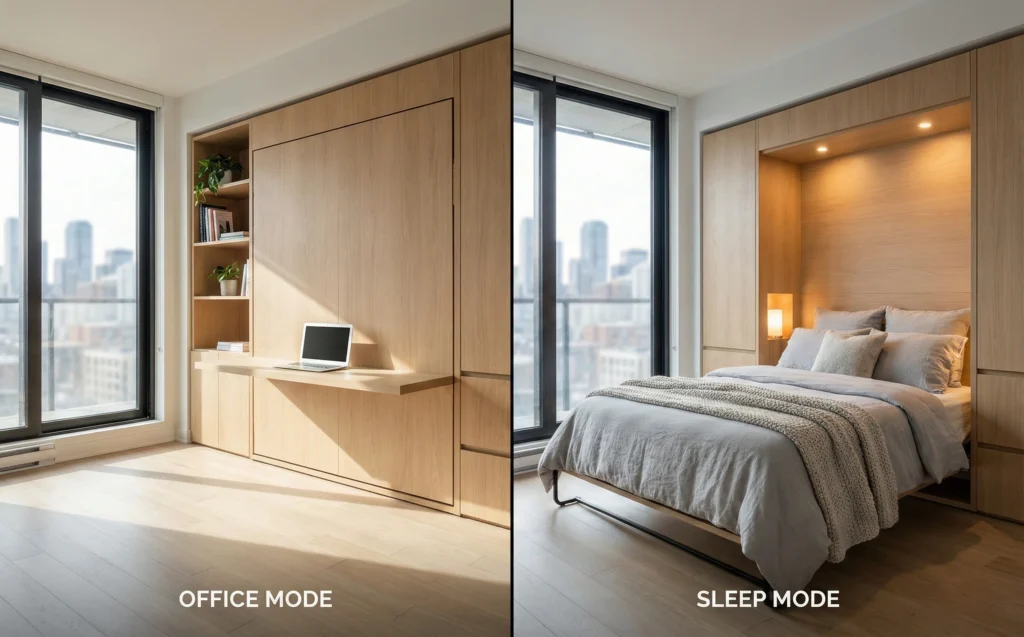
- Aesthetic Integration: A true Wall Bed is designed to vanish. It integrates seamlessly with custom cabinetry, side-storage units, and integrated lighting, appearing as a high-end wardrobe rather than a temporary sleeping solution.
The bottom line: Murphy beds traditionally rely on springs, while modern wall beds use gas-piston mechanisms for a smoother, silent operation.”
The Montreal Verdict
In 2025, the terms are effectively synonyms. Most high-quality manufacturers in Canada (including us) use the terms to describe the same goal: a bed that folds up vertically or horizontally to save space.
Which is better for Montreal?
Rather than worrying about the name, focus on the mechanism and the customization. For a Montreal condo where you can’t drill into concrete floors, a wall-mounted “Wall Bed” (often with a piston mechanism) is superior to an old-school floor-mounted Murphy bed.
Why This Matters for Montreal Real Estate?
Montreal’s housing market has shifted. We are seeing a rise in “micro-condos” and the need for multi-functional rooms.
- The “3 ½” Dilemma: You have a bedroom and a living room. But you need a home office. A wall bed allows your second room (or even your living room) to be an office by day and a guest room by night.
- The “Work-From-Home” Reality: Since the pandemic, many Montrealers work remotely. A bed taking up 40 square feet of prime office space 24/7 is a waste of rent.
- The “DIY” Advantage: Many Montreal apartments have narrow staircases (hello, winding exterior staircases!). Buying a pre-assembled Murphy bed is a nightmare to move. A DIY kit that you assemble in the room is often the onlyway to get a queen-size bed into a third-floor walk-up.
Choosing the Right Lifting Mechanism
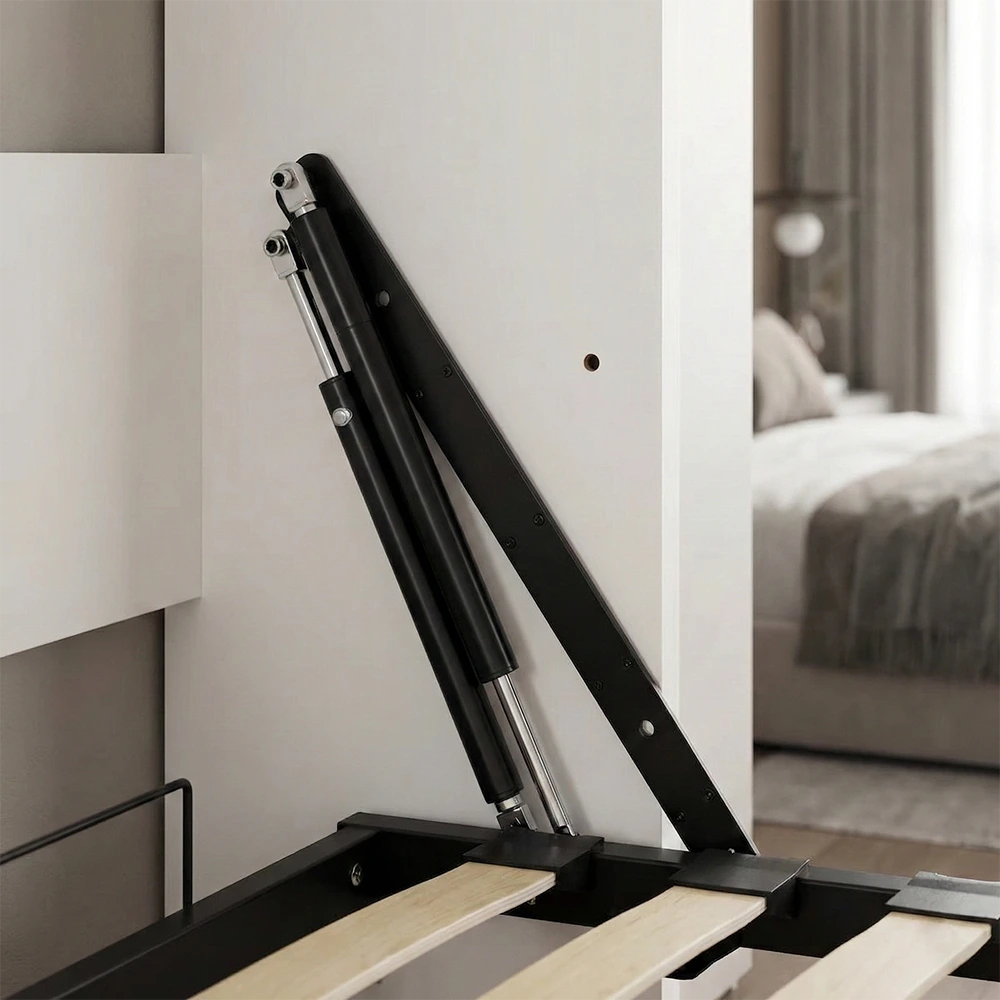
Safety First: When you’re using our online 3D tool to design your custom bed, the “heart” of your project is the lifting mechanism. It’s the engine that handles the heavy lifting, ensuring your bed feels weightless and stays secure. But which technology is right for your home?
The Spring Mechanism
Spring systems have been the industry standard for decades, but they come with a specific set of characteristics that every DIYer should know.
- The Pros: Their primary advantage is adjustable tension. If you change your mattress to a significantly heavier one later, you can technically add or remove springs to balance the weight.
- The Cons: Over time, metal springs are prone to “fatigue,” which can lead to that classic, unwanted squeaking. More importantly, for the independent builder, springs can be a headache. They require significant physical force to stretch and tension during installation, which can be intimidating (and occasionally risky) if you don’t have professional-grade tools.
The Piston Mechanism (Our Recommended Standard)
At our Montreal workshop, we’ve moved toward gas-piston technology—the same high-end hydraulics you find in the liftgates of luxury SUVs.
- The Pros: The user experience is night and day. Piston-driven beds offer a whisper-quiet, fluid motion that feels premium every time you open it. For the DIY enthusiast, pistons are a dream; they simply snap or bolt into place without the need for high-tension wrestling. Beyond ease of use, they are inherently safer; the contained hydraulic unit minimizes “pinch points,” making them much safer for households with curious kids or pets.
- The Cons: Pistons have a fixed tension. Unlike springs, you can’t just “tweak” them. However, we’ve solved this for you: our online design tool automatically calculates the exact piston strength required based on your bed size and specifications, ensuring a perfect balance every time.
The Bottom Line: While springs offer adjustability, gas pistons offer the safety, silence, and ease of assembly that modern Canadian homes demand.
Expert Tip: For our Montreal customers, we prioritize mechanisms that make self-assembly safe and manageable. Gas pistons are generally more user-friendly for the weekend warrior assembling a bed on a Saturday afternoon.
Customization
Don’t Settle for “Big Box” Cookie-Cutter
One of the biggest complaints about buying a wall bed from a generic big-box store is the lack of choice. They usually come in one colour (white) and one size. Using an online configuration tool (like ours) allows you to tailor the unit to your specific Montreal space:
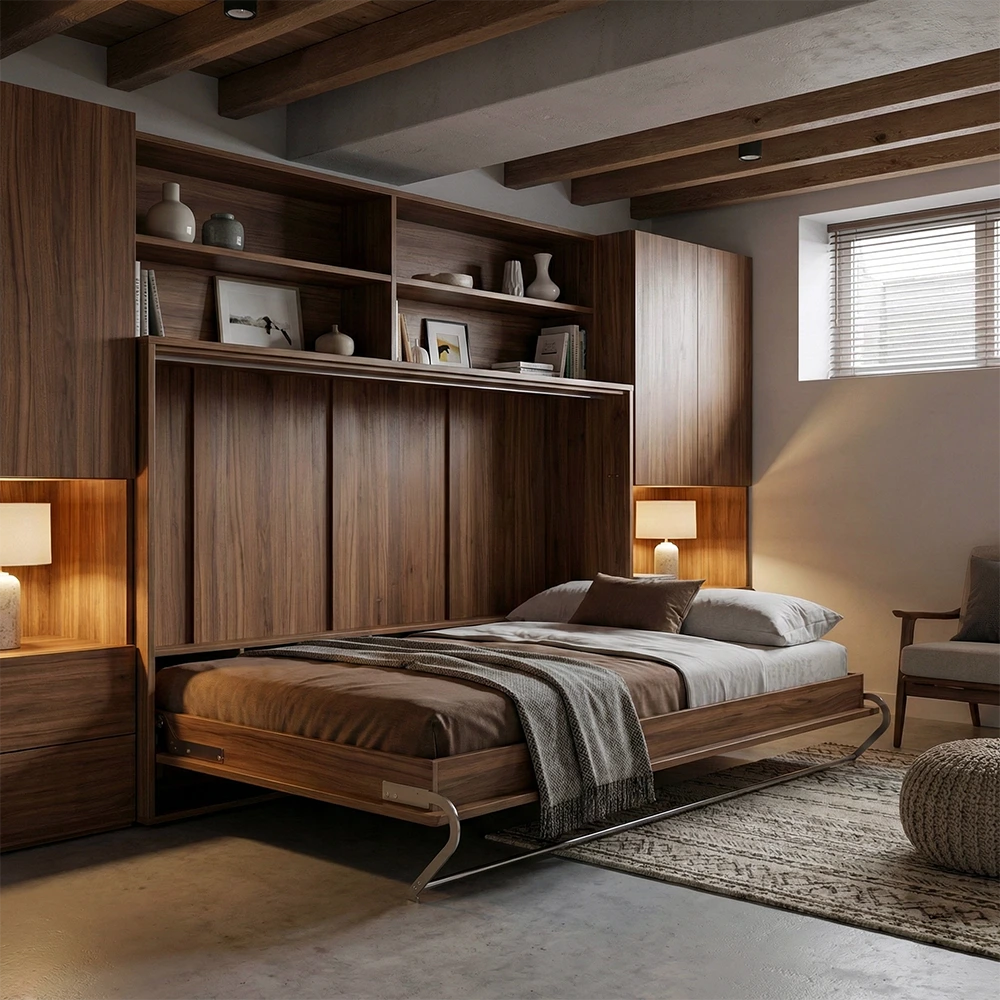
a) Vertical vs. Horizontal
- Vertical: The classic look. Best for rooms with standard ceiling height (at least 8 feet/96 inches).
- Horizontal: Best for basements with low ceilings (common in N.D.G. or Rosemont basements) or narrow rooms where a vertical bed would hit the opposite wall when open.
b) Storage & Cabinetry
- Side Cabinets: Add wardrobes or shelving units. In a condo with zero closet space, flanking your bed with two tall cabinets can double your storage.
- Desks: Some units allow for a desk attachment, perfect for that home office conversion.
c) Style
Handles & Finishes: Match your existing decor. Whether you want a rustic wood grain for a Plateau vibe or a high-gloss white for a Griffintown penthouse, customization is key.
The DIY Assembly: Empowering the User
This is where our model differs from the expensive “custom closet” companies in Montreal. Traditional custom wall beds can cost $5,000+ because you are paying for an installation crew.
The “Hybrid” Approach:
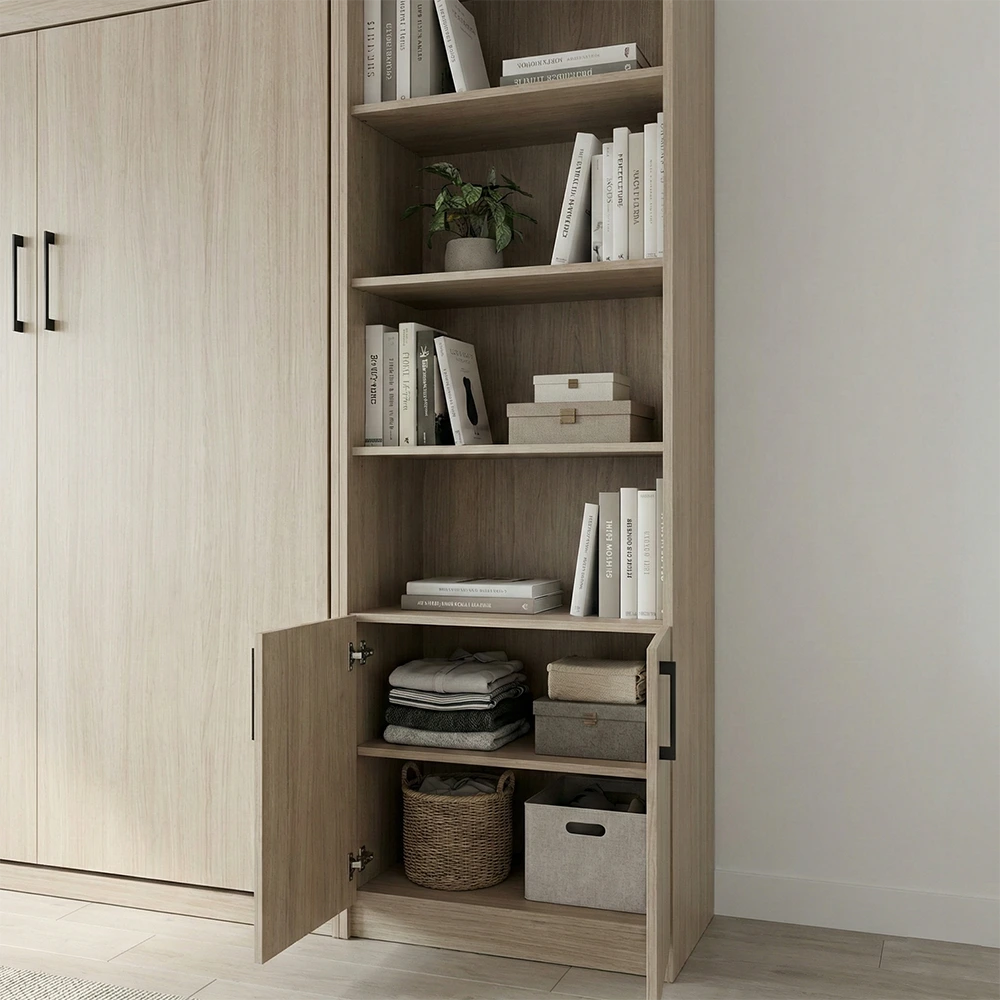
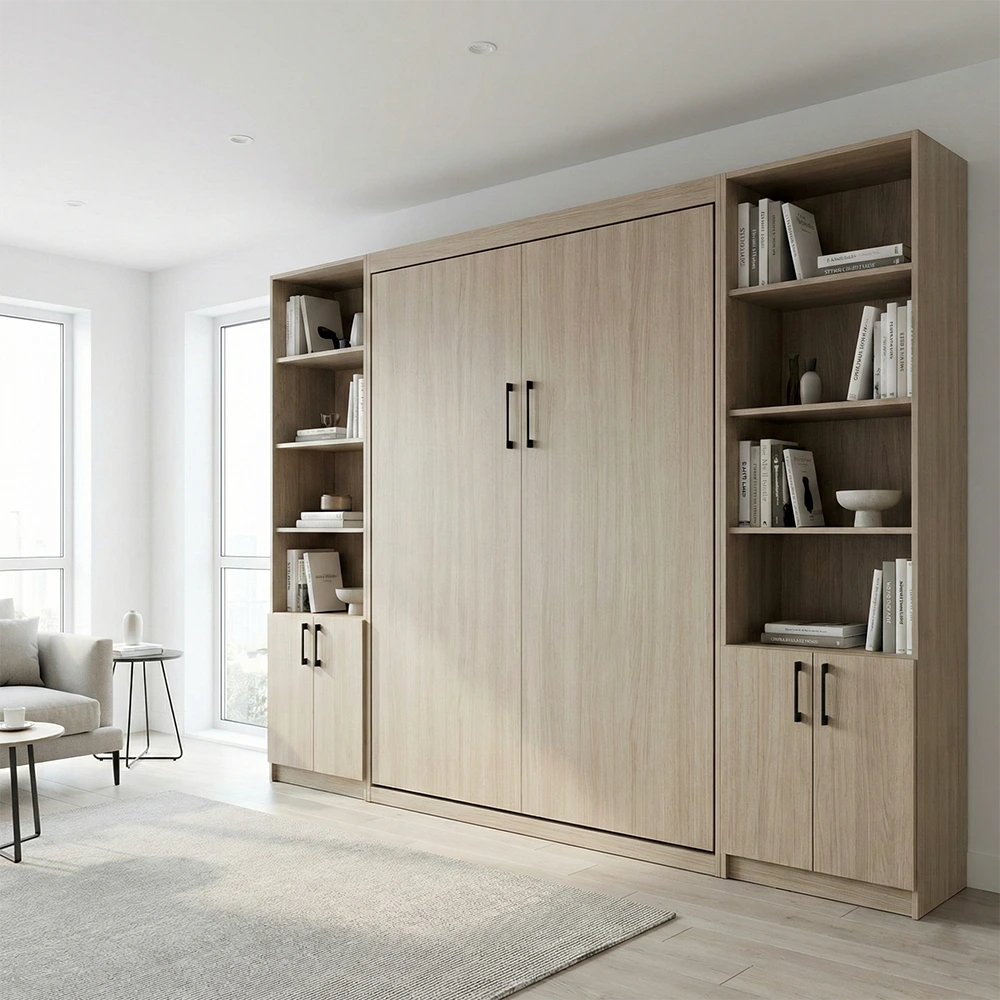
We believe in high-quality manufacturing combined with DIY assembly.
You Design: You use our online tool to create the perfect dimensions and look.
We Manufacture: We cut and prepare your bed right here in Montreal (supporting local!).
You Assemble: We ship the flat-packed, precision-cut parts to you.
Is it hard to assemble?
If you can handle a flat-pack dresser from a Swedish store, you can handle this. The difference is the quality of materials. We don’t use flimsy cardboard backing. We use robust materials meant to last, with clear instructions designed for real people, not robots.
Safety Note: The most critical step is anchoring the bed to the wall. In Montreal apartments with drywall over metal studs or plaster over lath, we provide guidance on the right anchors to ensure your bed never tips over.
Mattress Compatibility
A common myth is that you need a special “Murphy Bed Mattress.” False.
You can use almost any standard coil or foam mattress, provided:
- Thickness: It is usually under 12 inches thick (to ensure the leg mechanism can close over it).
- Weight: It is heavy enough to keep the bed down, but light enough for the mechanism to lift (standard mattresses fit this range perfectly).
- No Box Spring: Wall beds rely on a slat system or a flat panel for support, much like a platform bed.
Note: Since many Montrealers love memory foam, just be aware that foam can “slump” if left vertical for months at a time. We recommend a hybrid or ensuring you use the bed straps provided.
Cost Comparison: Is it Worth the Investment?
Let’s look at the numbers for a typical Queen setup in Montreal.
| Option | Estimated Cost (CAD) | Pros | Cons |
| Big Box Retailer | $1,800 – $2,500 | Cheap, fast shipping. | Particle board often breaks; limited sizes; confusing instructions; generic look. |
| Full Service Custom | $5,000 – $8,000+ | They install it for you. | Extremely expensive; long lead times; invasive installation process. |
| Our DIY Custom | $2,500 – $3,500 | Custom size & colour; high-quality local materials; you save labour costs. | Requires 3-5 hours of your time to assemble. |
For a piece of furniture that effectively adds an entire “room” to your apartment, the ROI (Return on Investment) is incredibly high compared to the cost of renting a larger apartment in Montreal (an extra room can cost $400-$600/month more in rent!).
Sustainability and “Made in Montreal”
In an era of fast furniture that ends up in landfills on July 1st (Moving Day), choosing a locally made wall bed is an eco-friendly choice.
- Reduced Carbon Footprint: We don’t ship heavy wood across the ocean. We manufacture locally in our Montreal workshop.
- Durability: High-quality laminates and hardware mean this bed will last for decades, not just a lease term.
- Local Economy: Your purchase supports local craftsmanship.
Ready to see how a custom Murphy bed fits in your specific dimensions? Try our 3D Room Planner and design your dream layout in minutes.
Frequently Asked Questions
We know that buying a custom bed online is a big decision. Below, we’ve answered the most common questions we get from Montrealers about safety, installation, and design.
Q: Is there actually a difference between a wall bed and a Murphy bed?
A: Historically, yes. “Murphy Bed” referred to a specific brand of metal-frame beds that folded from the floor. “Wall Bed” usually referred to beds that folded into a cabinet.
However, in Canada today, the terms are used interchangeably. At iZi lit, we use modern piston mechanisms that combine the best of both worlds: the safety of a wall-mounted cabinet with the comfort of a real slat-supported bed.
Q: Which is safer, a piston or a spring mechanism?
A: Both are safe when installed correctly, but we prefer gas pistons for our Montreal customers. Springs can snap or stretch over time and can be noisy. Gas pistons (like the ones we use in iZi lit wall beds) provide a smooth, dampening effect that prevents the bed from slamming down or flying up. They are also much easier for you to install yourself compared to tensioning heavy metal springs.

Q: Can I install a wall bed by myself?
A: Yes, our beds are designed specifically for the DIY enthusiast. If you can use a drill and a screwdriver, you can assemble our beds.
We recommend having a second person simply to help hold panels in place during the assembly process.
It usually takes a weekend afternoon (1-3 hours) to complete.
Q: Do I need to mount the bed to the floor?
A: No! This is a huge advantage for Montreal renters or condo owners with nice hardwood or heated concrete floors.
Our units attach securely to the wall studs (using minimal holes), leaving your floor untouched.
Q: My Montreal apartment has plaster walls (lath and plaster). Can I still install it?
A: Yes, but you must find the wooden studs behind the plaster.
We recommend using a high-quality magnetic stud finder or drilling small test holes where they will be hidden by the cabinet.
You may need longer screws than standard drywall installations to reach the solid wood. We provide a detailed guide on anchoring for different wall types in our instructions.
Q: Can I take the bed with me when I move?
A: Absolutely. Because the bed is attached to the wall with screws (and not built-in with glue or permanent molding), it is considered “moveable furniture.” You can disassemble it, patch the small screw holes in the wall, and take it to your new home.
Q: Can I use my existing mattress?
A: Most likely, yes. Our custom beds are designed to fit standard Canadian mattress sizes (Double/Full and Queen). The only requirement is the thickness (height).
- Maximum Thickness: Your mattress should generally be 12 inches (30 cm) or less in height to allow the legs to fold over it properly.
- Weight: Standard coil or hybrid mattresses work best. If you have a very light foam mattress, let us know, as we may need to adjust the piston strength.
Q: Can I leave the sheets and pillows on the bed when I close it?
A: Yes! That’s the beauty of a wall bed. You can strap the bedding down (using the provided straps) and close the bed. When you open it at night, it’s ready to sleep in. No more making the bed from scratch every night like you do with a sofa bed.
Q: Are wall beds comfortable for everyday sleeping?
A: Unlike sofa beds or futons, which have bars that dig into your back, a wall bed uses a real mattress resting on flexible wooden slats. This provides the same ergonomic support as a standard platform bed. Many of our customers use them as their primary bed in studio apartments.
Q: How does the online design tool work?
A: The iZi lit online 3D design tool puts you in the designer’s seat. You start by choosing your bed size (Vertical or Horizontal). Then, you can drag and drop side cabinets, choose your finish (from white matte to wood grains), and select your handles. You get a real-time price update, so there are no surprises.
Q: Why don’t you have a showroom in Montreal?
A: We decided to invest in quality materials and local manufacturing instead of expensive retail rent. By operating online with a local workshop, we cut out the middleman and the showroom markup. This allows us to sell you a commercial-grade custom bed for the price of a big-box store unit.
Q: Do you offer delivery to the South Shore or Laval?
A: Yes, we deliver throughout the Greater Montreal Area (including Laval, Longueuil, and the North/South Shores). Since we are local, our delivery times are significantly faster than ordering from overseas.
Q: What if I have a very specific space (e.g., under a bulkhead or staircase)?
A: This is where our “Horizontal” models shine. A horizontal Queen bed is much lower to the ground, making it perfect for basements with bulkheads or rooms with slanted ceilings. Check the exact dimensions in our design tool to see if it fits.
Q: Does a wall bed increase my home’s value?
A: While it is furniture and not a permanent fixture, it adds immense functional value. When selling a condo, demonstrating that a small “den” can function as a full guest bedroom with a high-end wall bed can be a major selling point for prospective buyers.
Q: Is a wall bed expensive?
A: Compared to buying a larger apartment, a wall bed is a bargain. For roughly $2,500 – $3,500, you are effectively gaining an extra room in your house. Our prices are competitive because you are buying directly from the manufacturer (us🤗) and handling the assembly yourself.
Q: How much space do I need?
A: For a Queen bed, you generally need about 65 inches of wall width and about 85-90 inches of clearance into the room when the bed is open.
Reclaim Your Space
Whether you call it a Wall Bed or a Murphy Bed, the result is the same: more room to live, work, and play in the city we love. By choosing a custom, locally made, DIY-friendly solution, you are getting the best of both worlds—premium quality without the premium installation price tag.
Ready to design your dream room?
Don’t let your bed hold your floor hostage. Try our Online Configurator today to build a bed that fits your exact dimensions and style.